
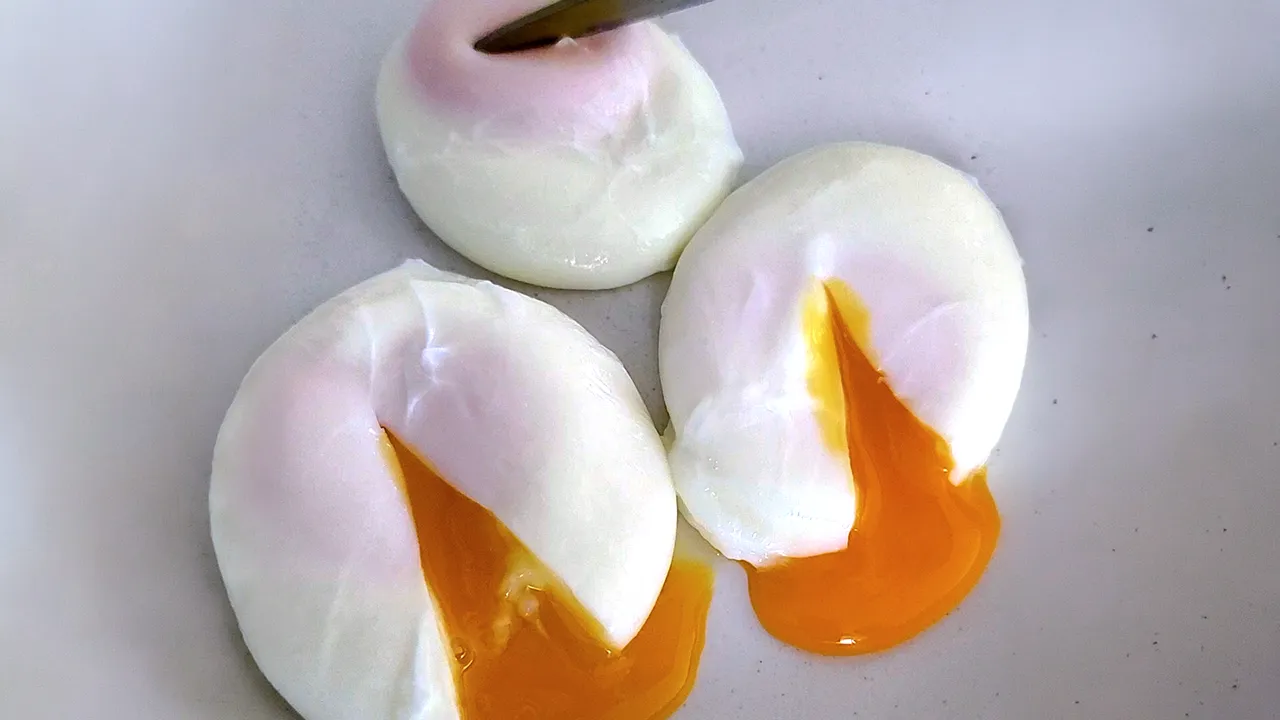
A Note on This Recipe
The usual advice for poaching an egg, vinegar in the water, a whirlpool swirl, isn’t as foolproof as it sounds. Both lean heavily on how fresh your eggs are, and fresh eggs aren’t always something you can count on.
This method skips both. Instead, it deals with the real culprit directly: the loose, watery part of the egg white that causes all that wispy, ragged mess in the first place. Strain it out before it ever hits the water, and you’ve solved most of the problem before you start. What’s left is just a few basics: a chilled egg, the right pot, and getting the temperature and timing right.
About the Method


A small to medium fine-mesh metal strainer is what you need to catch those loose whites. The shape of the strainer matters: too small and round, and the yolk can poke out; too shallow, and the egg flattens.
A chilled egg holds its shape better than a room-temperature one, because a colder white is naturally thicker and firmer, so it doesn’t spread as much once it hits the water.
A saucepan works well here, small or medium depending on how many eggs you’re cooking. I used a 1.75 qt nonstick ceramic saucepan. Choose one that’s deep enough to fill with water and fully submerge the egg. That gives the strainer room to go in and gives the egg time to sink slowly instead of dropping straight to the bottom.
How to Make It

Boil the Water
In a saucepan, bring water to a boil, then reduce the heat to medium-low and wait until the vigorous boil settles into small bubbles along the bottom.

Strain the Egg
Set a strainer over a bowl and crack in a chilled egg. Let the loose white drain through, swirling gently if some won’t let go.

Cook the Egg
Submerge the side of the strainer and slide the egg into the water slowly and gently. Lower the heat to low and cook for 3 to 4 minutes. Timing will vary a bit depending on egg size, your pot, and your stove.
If you want a rounder, fuller shape, gently nudge the water around the egg with a spoon once the white starts to set.

Drain and Serve
Lift the egg out with a slotted spoon if you have one (it drains the water as you go), or a regular serving spoon, then rest it on a paper towel to blot the excess water. This step matters more than it seems, since leftover water waters down the flavor.
Frequently Asked Questions
Why refrigerate eggs? In the US, commercially produced eggs are washed and sanitized, which strips the shell’s natural protective coating. That’s why they need to stay refrigerated. (In many other countries, eggs aren’t washed and can be stored at room temperature, so this assumes US eggs.)
Should you add salt to the water? Skip it. Salt can pull moisture out of the egg white too quickly, leaving it tough or rubbery instead of tender. Season the egg after it’s cooked instead.
Can you poach more than one egg at a time? Yes, if your pot is big enough. Add eggs one at a time, giving each a few seconds to settle before adding the next.
How do you clean the strainer? It rinses easily, just soak it in water right after use before the egg white has a chance to dry on the mesh.
Ingredients
- 3 eggs chilled (cold from the refrigerator)
- Water enough to fully submerge the egg
Instructions
- Fill a small saucepan with enough water to fully submerge the egg. Bring to a boil, then reduce heat to medium-low until the vigorous boil settles into small bubbles at the bottom.
- Set a fine-mesh strainer over a bowl. Crack in one chilled egg and let the loose white drain through, swirling gently if needed.
- Submerge the side of the strainer and slide the egg into the water. Lower the heat to low and cook for 3 to 4 minutes.
- Lift the egg out with a slotted spoon and rest it on a paper towel to blot the excess water before serving.
Watch the Recipe
Notes
- For a rounder, fuller shape, gently nudge the water around the egg with a spoon once the white starts to set.
- Let the egg rest on a paper towel for a few seconds after draining to blot off excess water, it makes a bigger difference to the final taste than it seems.
- Serve over toast, avocado toast, or a grain bowl, or on its own with a sprinkle of salt and pepper.
Leave a Reply